Practical applications
Use cases
Provenia can help when something materially important is at stake and preserving an artifact with verifiable integrity, an independent time reference, and clear context adds value to evidence that already exists.
Two families of use cases
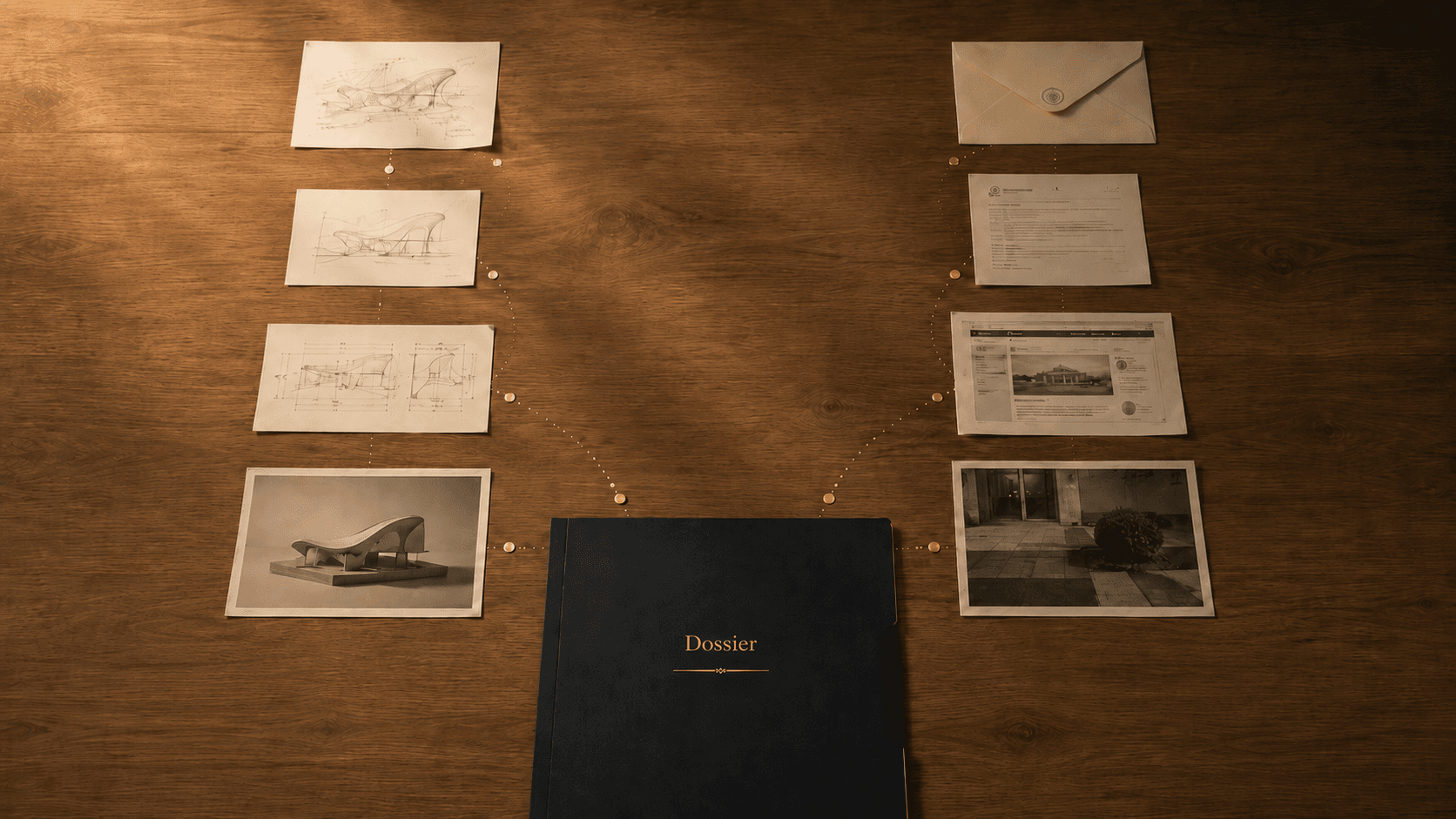
Creative provenance documents how a creative, technical, design, product, or research process evolves through versions, decisions, and milestones organized as chronological Records and brought together in a Dossier.
Digital-evidence preservation helps retain important material that may change, disappear, remain under someone else’s control, or lose its context.
For each Record, the SHA-256 hash is calculated locally on your device and the original file is not sent to Provenia. Later comparison with the preserved file, external timestamp evidence when available, the sequence of Records, and the Dossier all support technical verification and chronological review.
See how hashes, timestamps, and signatures differ and what each can establish.
A limitation that applies to every use case
A registered file is not automatic proof that the external event it depicts or describes happened exactly as claimed. Provenia can support verification that a preserved file matches its registered hash and that the hash existed by the independently certified time. That does not by itself establish that a scene, balance, page, message, physical condition, or event was real or complete.
Usefulness depends on context and the rest of the evidence. Keep originals and, where relevant, combine them with agreements, official reference numbers, platform records, medical records, incident reports, expert assessments, and appropriate administrative or judicial procedures.
Jump to a category
Creative provenance
1. Documenting work before publishing, sharing, or client delivery
Situation: A person or organization is preparing to publish work, share it externally for review, or send a version to a client and wants to preserve evidence of its current state. As the work develops, meaningful versions and milestones can also be documented rather than only the finished result.
What to preserve: Drafts, meaningful versions, prototypes, source files, research notes, design decisions, technical milestones, and the exact files prepared for publication, external review, or client delivery.
Good practice: Keep one Project for the work and create a Record before releasing or sharing a meaningful version. Retain the original files and describe what that version contains and why the milestone matters. Add Records as the work develops rather than for every small edit.
What Provenia adds: Verifiable file integrity through hashes, an independent time reference, a documented chronology, and a consolidated Dossier.
What Provenia does not prove: It does not prove absolute authorship, legal originality, or ownership, and it does not replace formal intellectual-property procedures.
Follow the Luma demo project from its first idea to a consolidated concept, with four milestones brought together in a Dossier.
Communications and temporary content
2. Important emails, proposals, and business negotiations
Situation: An email contains a proposal, condition, instruction, deadline, acceptance, attachment, or obligation that may later be disputed.
What to preserve: Preferably the exported original email (.eml or equivalent), relevant attachments, and a contextual PDF or screenshot when useful.
Good practice: Keep headers and attachments, do not edit the exported file, and use one Project for negotiations that develop over several stages.
What Provenia adds: It supports integrity checks for the preserved artifact and places the documentary set in a clear chronology.
What Provenia does not prove: It does not by itself establish that a recipient received, read, or understood the email at a particular time.
3. Threats, harassment, or other significant messages
Situation: Messages, audio, or files with serious personal, professional, civil, or criminal implications may be deleted or disputed later.
What to preserve: Where available, conversation exports, contextual screenshots, audio, documents, visible contact details, and a continuous screen recording when lawful and useful.
Good practice: Preserve sequence and context, avoid unnecessary cropping, keep the original conversation or device where possible, and document promptly.
What Provenia adds: It preserves the integrity of collected files and organizes them in an independent documentary chronology.
What Provenia does not prove: It does not by itself prove the sender’s real identity, the screenshot’s authenticity before the Record, technical delivery, or the truth of the events described.
4. Temporary messages that will disappear automatically
Situation: A materially important message is configured to disappear after a set period.
What to preserve: Permitted exports, contextual screenshots, received files, and other material legitimately available before it disappears.
Good practice: Preserve it promptly and retain enough context without bypassing platform protections.
What Provenia adds: It gives the preserved material an independent time reference and a verifiable integrity record before it disappears.
What Provenia does not prove: It cannot recover content that has already disappeared. One-time-view content is outside this use case.
Websites, pages, posts, and online content
5. A page, advertisement, offer, policy, or post that may change or disappear
Situation: Online content with meaningful financial, personal, professional, or reputational consequences may be edited or taken down.
What to preserve: A complete capture, URL, PDF, HTML when available, related files, and a screen recording that shows context when useful.
Good practice: Document early, avoid heavily cropped screenshots, preserve the URL and surrounding context, and use more than one capture method for higher-risk situations.
What Provenia adds: It preserves the integrity and chronology of the digital artifacts collected by the user.
What Provenia does not prove: It does not by itself prove that the content appeared at that URL, who published it, or whether it was altered before the Record.
Real estate and property condition
6. Condition of a rental property at handover and return
Situation: The condition of a property may be disputed at the beginning, during, or end of a tenancy, including damage, repairs, furniture, deposits, or upkeep.
What to preserve: Continuous video, photographs, an inspection report, meter readings, keys, included items, and visible defects.
Good practice: Use one Project per tenancy, move through each room systematically, keep the original video, and document promptly after the inspection.
What Provenia adds: It supports integrity checks and organizes handover, later events, and return in chronological order.
What Provenia does not prove: Video alone cannot establish that a scene was not arranged beforehand; the independent time evidence applies to the registered hash.
20. Pre-purchase property inspection
Situation: Before signing or handover, a buyer wants to document the visible condition of a property and the items present.
What to preserve: Continuous room-by-room video, detailed photographs, included items, meter readings, and relevant documents.
Good practice: Document during the pre-purchase inspection and again at key handover when appropriate.
What Provenia adds: It preserves an integrity-checked, chronological reference for material produced before the transaction.
What Provenia does not prove: It does not replace a professional inspection or identify hidden defects, their cause, or what the seller knew.
Consumer disputes, construction, and services
7. Delayed, abandoned, incomplete, or defective construction work
Situation: Work is delayed, incomplete, or defective while its physical condition changes and contractual milestones or repair attempts continue.
What to preserve: Relevant contracts or schedules, milestone photographs and video, defects, substitute materials, communications, and attempts to correct the work.
Good practice: Use one Project per job, document important dates and issues, combine wide views with details, and keep the originals.
What Provenia adds: It organizes an integrity-checked timeline of material showing progress and observed defects.
What Provenia does not prove: It does not determine fault, technical cause, an official completion percentage, or compensation.
8. Custom furniture that is late, incomplete, or defective
Situation: A significant order is late or differs in dimensions, materials, finish, or operation.
What to preserve: The approved design, schedule, installation photographs and video, defects, communications, visits, and final condition.
Good practice: Document key milestones: promised date, initial installation, material defects, significant corrections, and final result.
What Provenia adds: It organizes service delivery chronologically and preserves file integrity at each stage.
What Provenia does not prove: It does not replace expert assessment when the dispute turns on structural quality, materials, or specialist compliance.
9. A valuable product arrives damaged or differs from the order
Situation: The value or dispute risk justifies documenting a product that arrives damaged, incomplete, used, unsealed, incorrect, or otherwise inconsistent with the order.
What to preserve: When proportionate, continuous unboxing video, packaging, label, seals, serial number, defect, and supplier communications.
Good practice: When the risk justifies it, film continuously from the sealed package through identification of the problem and keep packaging and accessories.
What Provenia adds: It preserves the integrity and chronology of files produced when the item was received.
What Provenia does not prove: It does not by itself establish who caused the damage or when it occurred.
10. A vehicle, appliance, or equipment item delivered for repair
Situation: A valuable item is handed over for repair and a dispute later arises about its earlier condition, new damage, parts, mileage, or work performed.
What to preserve: Before-and-after photographs and video, serial numbers, mileage where relevant, existing defects, work orders, and condition on return.
Good practice: Document immediately before handover and collection; if the fault returns, document it before another intervention.
What Provenia adds: It creates an integrity-checked chronological comparison of the before, after, and any recurrence.
What Provenia does not prove: It does not determine a mechanical or electronic cause or the technical quality of a repair.
Custody, transfer, and logistics handoffs
11. Car rental, moving, transport, or delivery of an item into someone else’s custody
Situation: A materially valuable item changes hands temporarily and its condition, damage, or missing parts may later be disputed.
What to preserve: Systematic before-and-after photographs and video, identifiers, accessories, mileage or fuel where relevant, and handover documents.
Good practice: Document immediately before and after the transfer, covering details that could lead to a charge or dispute.
What Provenia adds: It preserves an integrity-checked chronological reference for material produced at each handoff.
What Provenia does not prove: It does not prove that later damage necessarily occurred while the item was in the third party’s custody.
Insurance claims and loss events
12. Condition after an accident, flood, fire, or other loss event
Situation: After an event that may lead to a claim or coverage dispute, physical conditions can change through rescue, cleanup, removal, repair, or disposal.
What to preserve: Wide and detailed photographs and video, response documents, communications, estimates, and before-and-after sequences where relevant.
Good practice: Preserve evidence without taking risks or interfering with emergency work, and register the original material promptly.
What Provenia adds: It preserves the integrity and chronology of artifacts produced by the user.
What Provenia does not prove: It does not establish the cause, liability, technical extent of damage, or insurance coverage.
Public services and physical conditions
13. A public-service or physical-condition problem persists after a complaint
Situation: A condition that may cause damage, injury, or loss remains after a report or complaint.
What to preserve: Photographs, video, the complaint reference, new images at meaningful milestones, and documentation of any resulting damage.
Good practice: Include enough context to identify the location, stay safe, and create new Records only when the condition changes or a meaningful event occurs.
What Provenia adds: It organizes preserved material before and after the complaint in chronological order.
What Provenia does not prove: It does not establish the authority’s responsibility, causation, or the exact capture date from the image content alone.
Professional work and service delivery
14. Professional deliverables, scope, and requested changes
Situation: A valuable project leads to disagreement about what was requested, delivered, approved, changed, or present in a particular version.
What to preserve: Approved scope, main deliverables, meaningful versions, approvals, change requests, and final delivery.
Good practice: Use one Project per engagement and document commercial and technical milestones rather than every small edit.
What Provenia adds: It creates a portable external timeline of preserved files and communications.
What Provenia does not prove: It does not by itself establish complete performance, service quality, or legally effective acceptance where other requirements apply.
Healthcare documentation and procedures
15. Visible evolution after a cosmetic, dental, or other procedure
Situation: A material outcome has a visible manifestation that may change before a later assessment.
What to preserve: When needed, your own photographs and video, estimates, instructions, communications, expenses, and related documents.
Good practice: Document meaningful moments, keep angle and lighting consistent where possible, preserve originals, and avoid exposing other people.
What Provenia adds: It preserves the integrity and chronology of files produced by the user.
What Provenia does not prove: It does not diagnose, establish professional error or causation, or replace medical records, an expert report, or examination.
16. A significant healthcare denial or delay recorded through a fragile channel
Situation: This adds value only when a materially important denial or delay appears in a channel that does not reliably preserve the exact content.
What to preserve: The request or prescription where relevant, the denial or screen, reference numbers, communications, and necessary documents.
Good practice: Use and preserve official channels first. Use Provenia only as an additional layer where there is a concrete preservation gap.
What Provenia adds: It preserves an independent integrity and chronology record for files kept by the user.
What Provenia does not prove: It does not replace official references, medical records, prescriptions, administrative or judicial decisions, or medical assessment.
Healthcare products
17. A medicine, device, or health product with an apparent defect
Situation: A significant risk involves a visible physical condition that may no longer be observable after return or disposal.
What to preserve: Photographs and video of packaging, batch, expiry date, seals, serial number, apparent defect, and communications.
Good practice: Keep the product and packaging when safe, and do not use or handle anything that could present a risk.
What Provenia adds: It preserves the integrity and chronology of the user’s visual and documentary artifacts.
What Provenia does not prove: It does not establish contamination, a technical defect, clinical causation, or manufacturer responsibility.
Transactions between individuals
18. Private sale of a valuable item
Situation: After a sale, one party disputes condition, operation, damage, mileage, or stated characteristics.
What to preserve: Continuous video at handover, detailed photographs, identifiers, mileage or serial number, and the agreement or receipt.
Good practice: Document immediately before handover with good lighting and systematic coverage, keep the original, and use one Project per transaction.
What Provenia adds: It preserves the integrity and chronology of files showing the condition presented before transfer.
What Provenia does not prove: It does not identify hidden defects, replace expert assessment, or prove that the other party knew and accepted every condition.
Work and income
19. Working hours and after-hours communications controlled by an employer
Situation: There is meaningful exposure and a risk of losing access to messages, tasks, or communications relevant to a dispute about hours, availability, or routine.
What to preserve: Lawfully accessible exports or contextual screenshots, emails, task records, and related material.
Good practice: Preserve proportionately and lawfully, avoid unnecessary confidential information, and document meaningful milestones rather than conducting indiscriminate surveillance.
What Provenia adds: It preserves an independent integrity and chronology reference for material legitimately kept by the user.
What Provenia does not prove: It does not determine employment status, authorization, compensation, or entitlement and does not replace employment-law assessment.
Accidents and liability
21. An accident scene before vehicles or surroundings are moved
Situation: After a collision, positions, signs, damage, and observable conditions can change quickly and later matter in a dispute.
What to preserve: Photographs and video of the scene, vehicle positions, damage, identifying details, signs, and road conditions, without putting anyone at risk.
Good practice: Document only when safe and without delaying emergency response; supplement it with official reports and other sources.
What Provenia adds: It preserves the integrity and chronology of files produced at the scene.
What Provenia does not prove: It does not determine fault, speed, technical dynamics, or liability and does not replace an official report or expert assessment.
Gig and platform work
22. A work-platform account is suspended or deactivated
Situation: Suspension interrupts income and access to earnings history, ratings, messages, or reasons given by the platform.
What to preserve: Earnings and rating history, notices, messages, and relevant documents while they remain accessible.
Good practice: Do not document routinely without cause. Preserve material when warnings, concrete risk, or significant events arise.
What Provenia adds: It preserves an independent integrity and chronology reference for information kept before access was lost.
What Provenia does not prove: It does not determine whether suspension was justified and does not replace an appeal channel or legal assessment.
Brand identity and design evolution
23. Earlier use of a brand, name, visual identity, or domain
Situation: A business with meaningful commercial value and dispute risk wants to document materials produced under an identity at a particular stage.
What to preserve: Websites, design versions, marketing materials, proposals, invoices or agreements where relevant, and other contemporary artifacts.
Good practice: Use one Project, document real milestones of use, and combine them with commercial records and appropriate formal protection where applicable.
What Provenia adds: It preserves the integrity and chronology of contemporary material that may form part of a broader body of evidence.
What Provenia does not prove: It grants no trademark right, replaces no registration procedure, and does not by itself prove commercial use or legal priority.
Promotions, loyalty programs, points, and cashback
24. A promotion requires prior activation or eligibility steps
Situation: A meaningful benefit requires enrollment, a specific link, a time window, minimum spend, or another condition.
What to preserve: Rules, page or PDF, proof of activation, confirmation, qualifying purchase or transfer, receipt or order, tracking, and final outcome.
Good practice: Use one Project per significant promotion, document before or soon after the qualifying action, keep the rules and confirmation, and avoid trivial promotions.
What Provenia adds: It organizes an integrity-checked chronology of the promotion, enrollment, qualifying action, expected benefit, and outcome.
What Provenia does not prove: It does not by itself establish that every condition was met or that the program must provide the benefit.
Financial accounts and platform risk
25. Brokerage or exchange positions when access is at concrete risk
Situation: Material financial exposure coincides with signs of instability, blocked withdrawals, intervention, or likely loss of access.
What to preserve: Native CSV or PDF exports, balances, history, deposit and withdrawal records, and relevant communications.
Good practice: Do not create routine periodic Records. Use this only when the value and concrete risk justify it.
What Provenia adds: It preserves the integrity and chronology of exported files while the platform remains accessible.
What Provenia does not prove: It does not by itself establish the true economic balance, create a claim, guarantee recovery, or replace the institution’s own records.
Informally documented financial arrangements
26. An informal loan between individuals
Situation: A significant loan has already been agreed through messages without a formal contract.
What to preserve: Conversation exports or contextual screenshots, transfer receipts, and payment records.
Good practice: Prefer a written agreement and proper formalization. Provenia can document what already exists but should not encourage informality.
What Provenia adds: It preserves the integrity and chronology of artifacts describing terms and payments.
What Provenia does not prove: It does not create a contract, set interest or adjustments, or by itself determine the legal nature of the transfer.
Education, exams, and selection processes
27. A preliminary answer key or exam page that may change
Situation: This adds value only when the responsible body does not reliably preserve official versions of a high-impact selection process.
What to preserve: The official PDF, a complete capture, and the URL.
Good practice: Keep the official document first; use Provenia only where there is a real version-history or preservation gap.
What Provenia adds: It preserves the integrity and chronology of the copy obtained by the candidate.
What Provenia does not prove: Without other evidence, it does not establish that the body published that version and does not replace an official appeal.
Agriculture and insurance
28. A visual baseline for crops, fields, or livestock
Situation: A high-value operation may benefit from a visual baseline that complements professional reports after a material event.
What to preserve: Milestone photographs and video, relevant management documents, and related records.
Good practice: Use only when the economic value and insurer or lender requirements justify it; do not replace technical protocols.
What Provenia adds: It preserves the integrity and chronology of visual artifacts produced throughout the cycle.
What Provenia does not prove: It does not establish actual agronomic condition, cause of loss, correct management, or entitlement to compensation.
Animal transfer
29. Transfer of an animal with meaningful economic or contractual value
Situation: A higher-value transaction may later involve disagreement about the animal’s visible condition at handover.
What to preserve: Photographs and video, the transfer document, vaccination records, reports, and relevant communications.
Good practice: Prioritize veterinary examination and formal documentation; use Provenia only as a supplementary layer.
What Provenia adds: It preserves the integrity and chronology of material produced at transfer.
What Provenia does not prove: It does not replace a veterinary report or determine the cause of a health condition or responsibility.
Informal business arrangements
30. An informal partnership or business arrangement
Situation: An operating business already moves meaningful value while its terms remain in messages rather than a formal agreement.
What to preserve: Communication exports, contribution records, and relevant documents.
Good practice: Formalize the agreement or entity as soon as possible; Provenia only documents the informal period.
What Provenia adds: It preserves the integrity and chronology of artifacts describing the agreed terms.
What Provenia does not prove: It does not create a legal entity, define ownership or liability, or replace a partnership or company agreement.